

Foundation
Class Size:
0 – 18 Months
Session Timing:
45 minutes
Infant
A newborn arrives with 100 billion neurons and almost no connections between them. In the first two years of life, the brain forms synaptic connections at a rate of up to 1 million per second. Every sight, sound, touch, smell, and movement a child experiences in this window is building their brain and laying down the neural architecture that everything else will be built upon.This is not a time for academics. This is a time for stimulation – rich, varied, multi-sensory input that gives the developing brain the raw material it needs to wire itself well. This is what Sensory Spark is built for.
What Happens in a Session
Multi-Sensory Stimulation: High-contrast visual cards, sound patterns, texture exploration, and light-based activities stimulate the visual and auditory cortex during their most formative period.
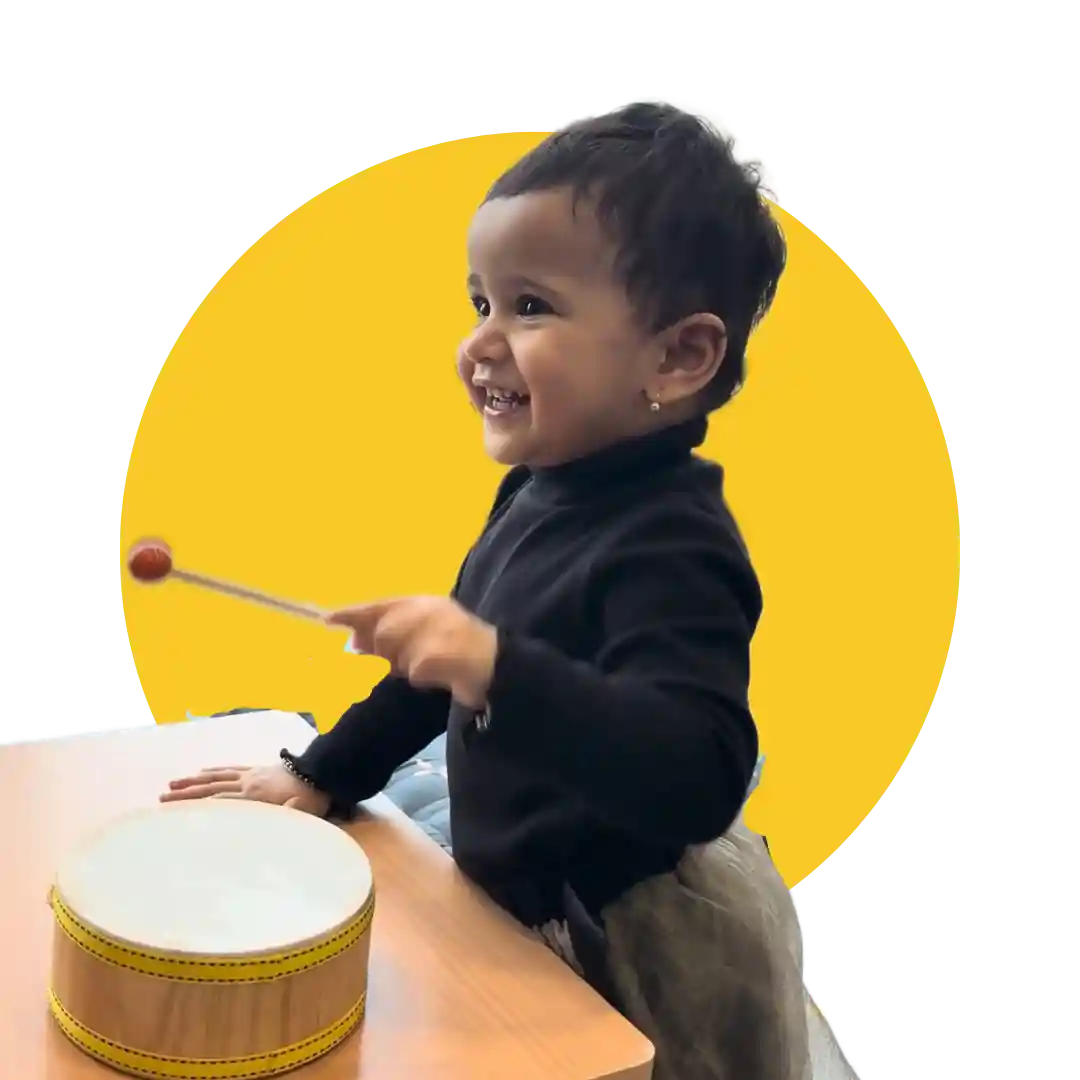
Rhythm & Music Exposure: Rhythm is one of the earliest forms of brain organisation. Musical patterns, rhymes, and beat-based activities build auditory processing and early language foundations.
Parent-Bond Exercises: Serve-and-return interaction, the back-and-forth exchange between parent and child is the single most powerful driver of early brain development. We teach parents how to engage intentionally, turning everyday moments into developmental opportunities.
Motor Play: Tummy time, reaching, grasping, tracking – activities designed to build bilateral coordination, spatial awareness, and physical confidence in the developing body.
Cause & Effect Play: Push, pull, drop, stack – simple physical interactions that teach the infant brain one of its most important early lessons: my actions change the world around me. This is the foundation of logical thinking, problem solving, and early mathematical understanding.
Story Time: Rich, expressive read-alouds and visual storytelling expose infants to language, sequence, and imagination at the earliest possible stage. Story time at this age isn’t about comprehension, it’s about building the brain’s relationship with narrative, words, and the joy of being read to. These are the roots of a lifelong reader.