
Elevation
Age Group:
3 – 5 Years
Session Timing:
60 minutes
Junior
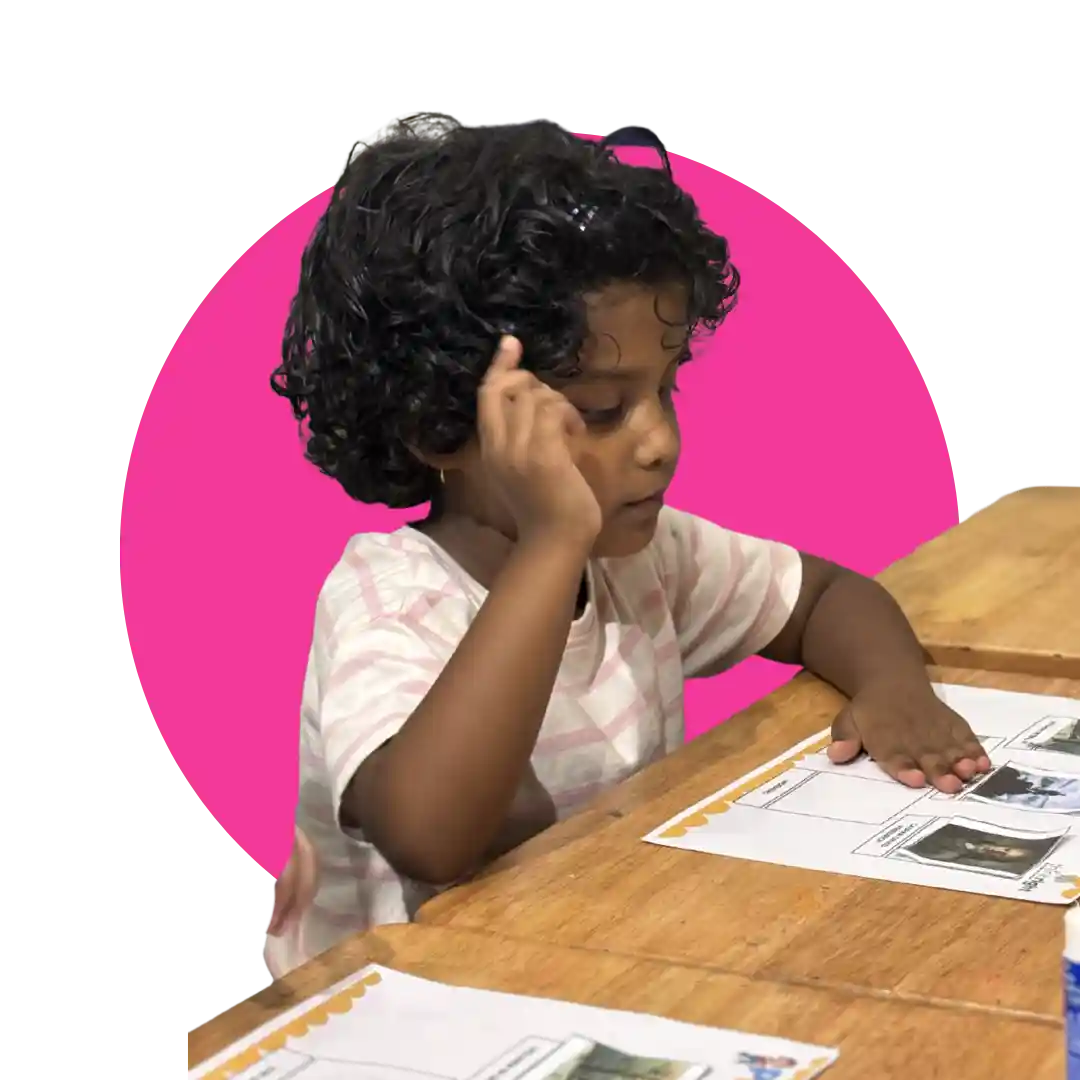
By age 3, the foundational architecture of the brain is largely in place. The right brain’s dominance begins to gradually shift as the left brain (language, logic, sequencing) starts to come online more strongly. This transition is one of the most important moments in early childhood development. It is the window in which whole brain integration, training both hemispheres to work together, becomes both possible and essential. A child between 3 and 5 is ready for more. More complexity, more challenge, more depth. Their memory is sharper. Their attention is longer. Their imagination is at its richest.At the same time, the right brain is at its most dominant and receptive. Memory, imagination, pattern recognition, and visual processing are operating at a level that will never be this accessible again.
What Happens in a Session
Advanced Flashcard Stimulation: Flashcard sequences become faster, more complex, and more layered, pushing the right brain’s visual processing capacity and deepening photographic memory development.
Memory Techniques: The same core techniques (peg memory, linking, associative learning, and mandala) continue, but with meaningfully more complexity. Chains are longer, associations more layered, and mandalas more detailed. Children are gently pushed beyond what feels comfortable, building real cognitive stretch and a growing confidence in their own memory.
Emotional Intelligence Activities: Structured activities around feelings, empathy, and self-awareness build the emotional vocabulary and regulation skills that research consistently links to long-term life success — often more reliably than IQ.