
Cognition
Age Group:
18 Months – 3 Years
Session Timing:
60 minutes
Toddler
Something remarkable happens around age two. The brain, having spent its first two years building billions of neural connections, begins to build the pathways that are used and prune the ones that are not. This process, called synaptic pruning, means that what a child experiences between 2 and 3 directly determines which neural architecture stays and which is lost. At the same time, the right brain is at its most dominant and receptive. Memory, imagination, pattern recognition, and visual processing are operating at a level that will never be this accessible again.
What Happens in a Session
Flashcard Stimulation: High-speed flashcards stimulate the right brain’s visual processing pathways and begin laying the foundations of photographic memory. Speed is deliberate. The right brain processes fast. Slowing down actually reduces effectiveness.
Memory Techniques: Children are introduced to peg memory, linking, associative learning, and mandala activities; all delivered through play, story, and imagination. At this age the techniques are kept simple and joyful, letting the brain build its first memory muscles without any sense of effort or pressure.
Music & Rhythm: Rhythm-based activities, songs, and movement sequences build auditory processing speed, attention regulation, and early language acquisition while keeping energy levels high and engagement total.
Visualisation Exercises: Guided imagery activities begin training the brain’s mental visualisation centre, one of the most powerful cognitive tools a child can develop, and one that becomes significantly harder to train after age 7.
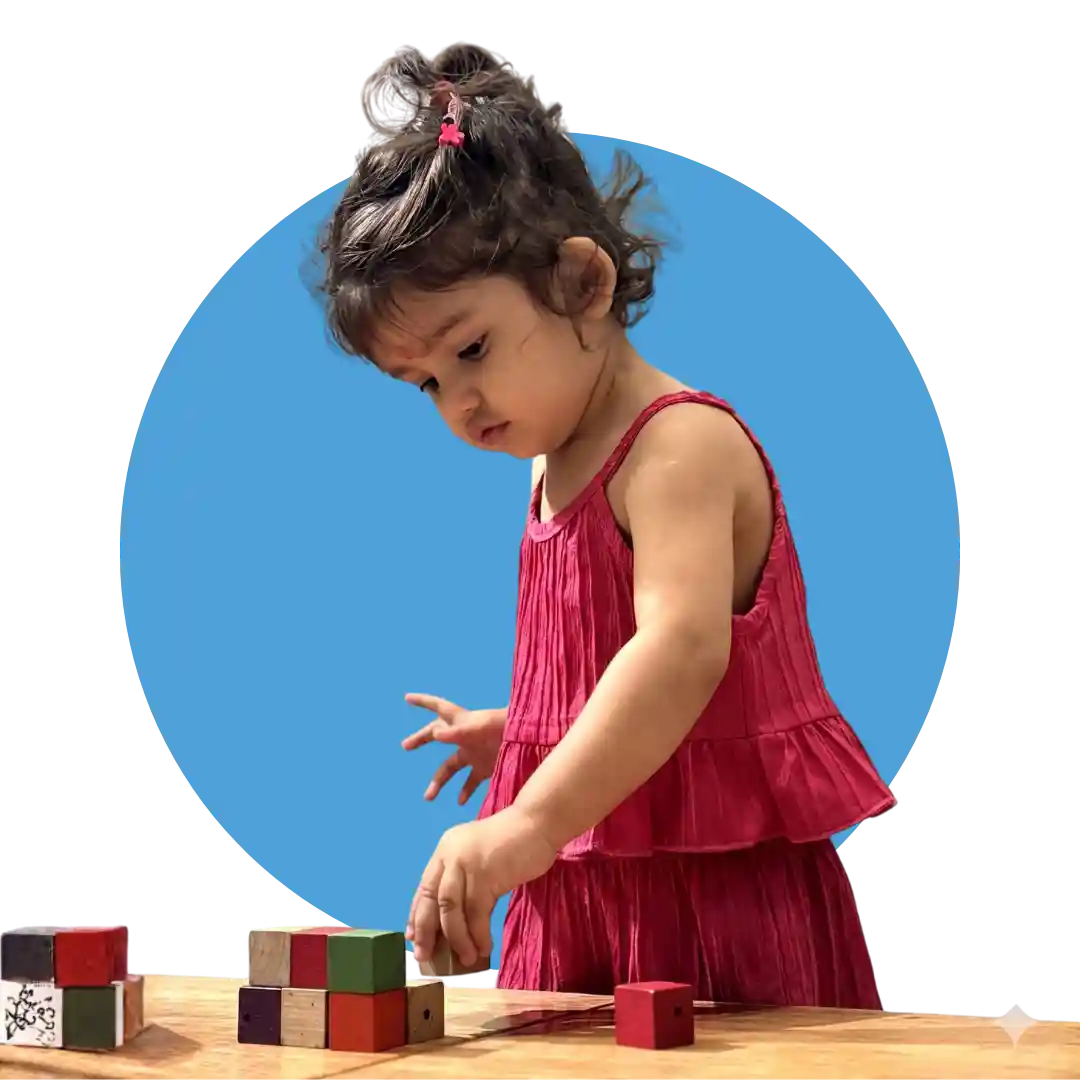
Creative Exploration: Art, sensory play, and theme-based activities give the right brain’s creative and emotional centres room to expand, building imagination, self-expression, and early emotional intelligence.